2. BMS1202 Pinouts and Descriptions
On BMS1202 one connector carries the cell connections and the temperature sensors, and four connectors (two RJ45 and two 4-pin connectors) carry the isolated daisy chain; all four are the same port, so any of them can go to the master or to the next module. The ADDRESS switch sets the module ID and the LINE TERM switch terminates the daisy chain. Arrange the cables with the pinouts below; a number in the figures opens the table of that connector.
Danger
Check every connection and cable before you plug a connector into the BMS1202.
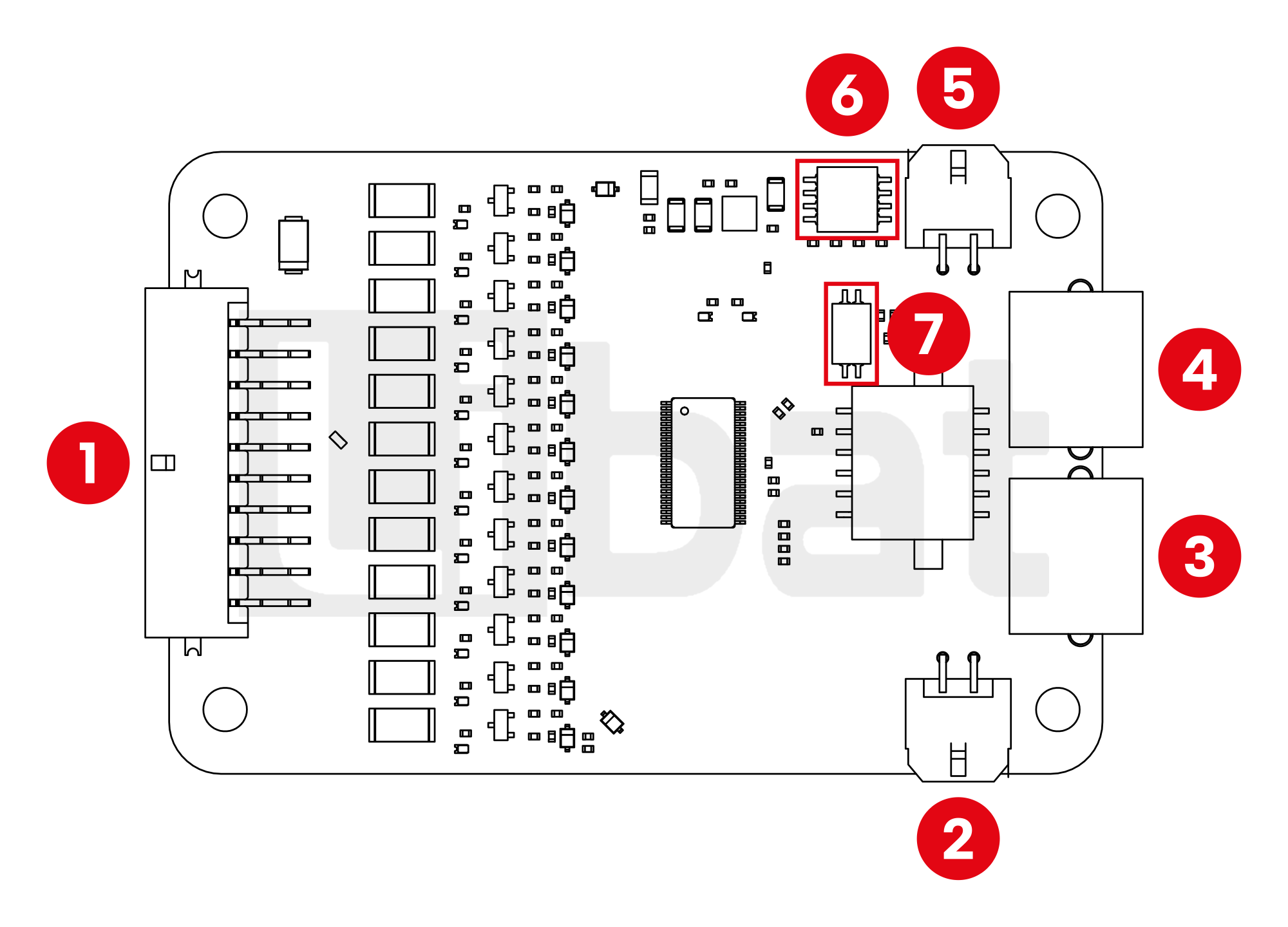
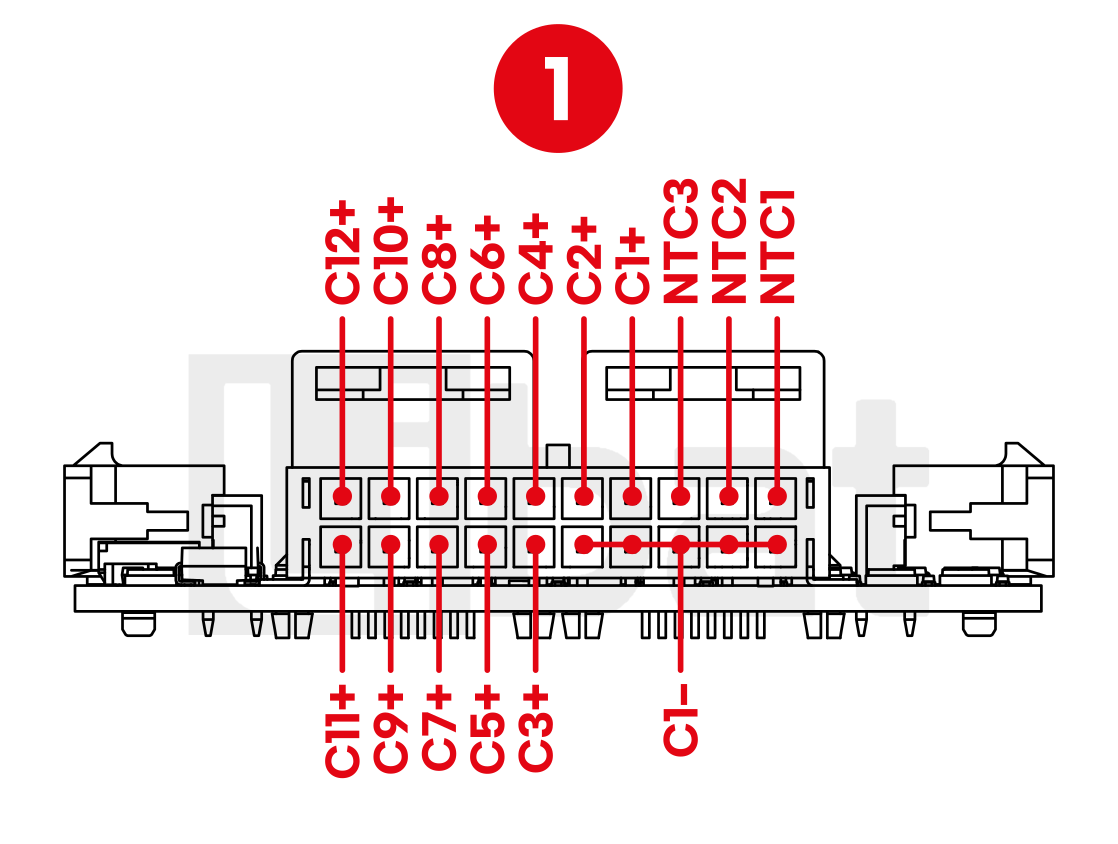
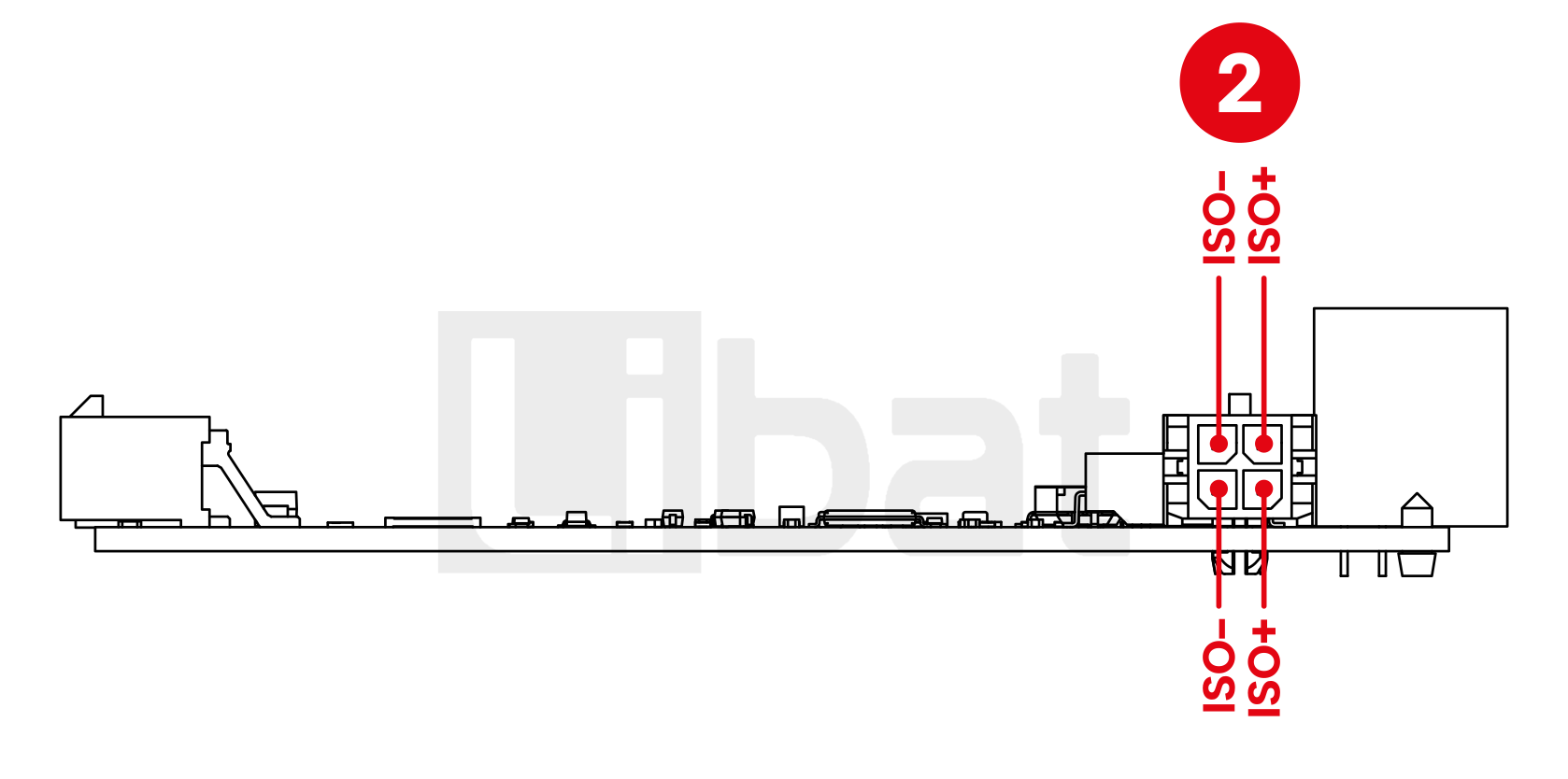
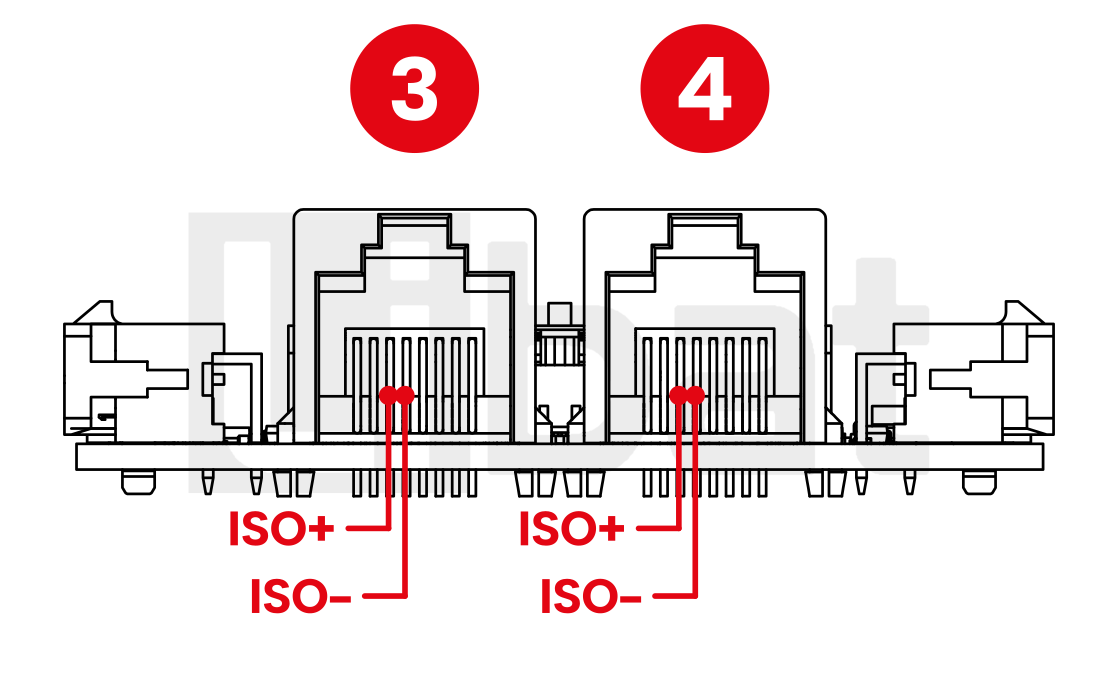
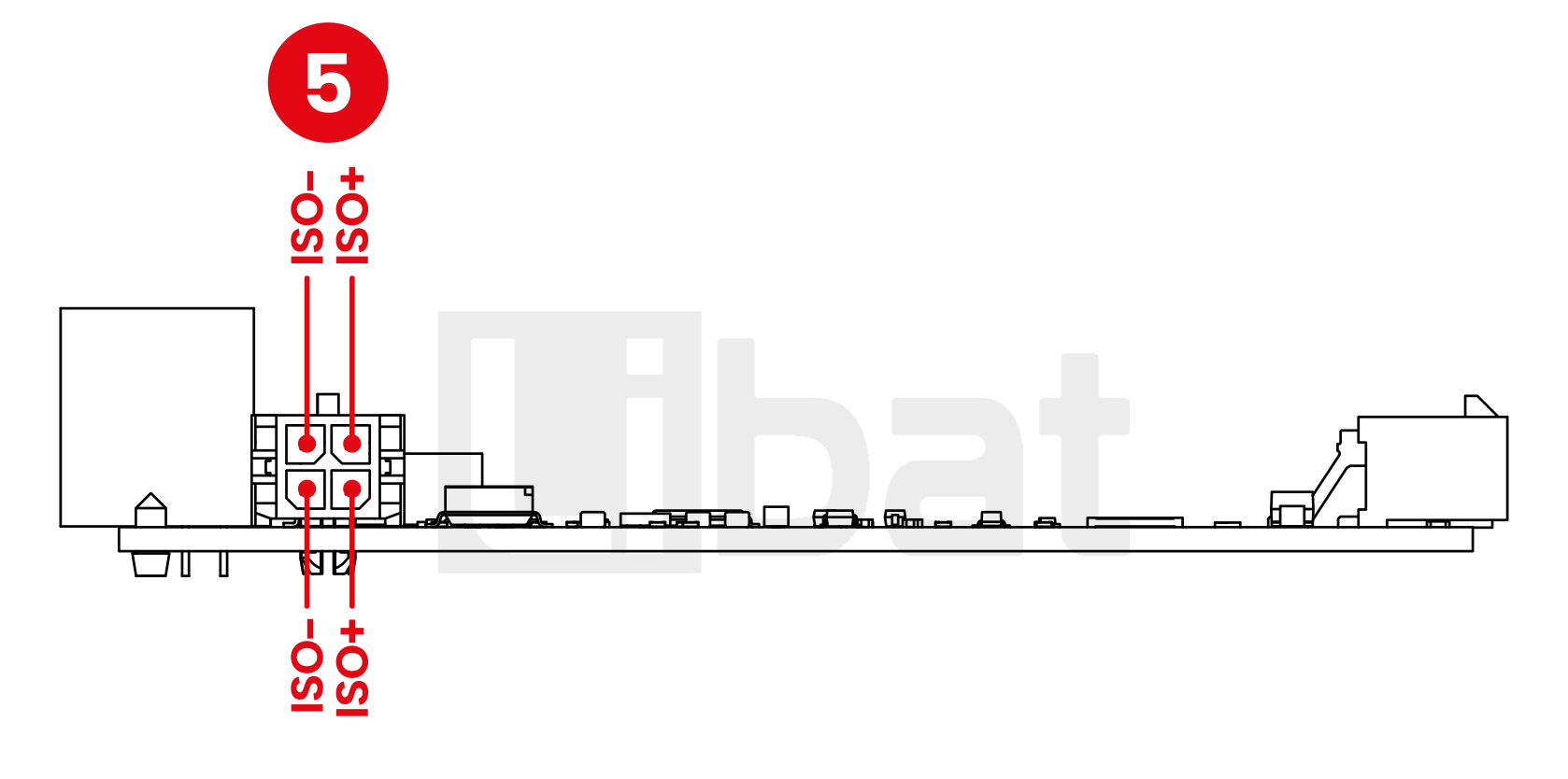
Table.2.1: Connector No#1 Descriptions
| Connector No. | Pin No. | Description (see Fig.2.1 and Fig.2.2) |
|---|---|---|
| 1 | 1, 2, 3, 4, 5 | Bottom of the battery string, 1st cell's negative tab (C1-), also the ground (GND) of the temperature sensors |
| 1 | 6 | 3rd cell's positive tab (C3+) |
| 1 | 7 | 5th cell's positive tab (C5+) |
| 1 | 8 | 7th cell's positive tab (C7+) |
| 1 | 9 | 9th cell's positive tab (C9+) |
| 1 | 10 | 11th cell's positive tab (C11+) |
| 1 | 11 | External Temperature Sensor No.1 (NTC1) |
| 1 | 12 | External Temperature Sensor No.2 (NTC2) |
| 1 | 13 | External Temperature Sensor No.3 (NTC3) |
| 1 | 14 | 1st cell's positive tab (C1+) |
| 1 | 15 | 2nd cell's positive tab (C2+) |
| 1 | 16 | 4th cell's positive tab (C4+) |
| 1 | 17 | 6th cell's positive tab (C6+) |
| 1 | 18 | 8th cell's positive tab (C8+) |
| 1 | 19 | 10th cell's positive tab (C10+) |
| 1 | 20 | Top of the battery string, 12th cell's positive tab (C12+) |
Table.2.2: Connector No#2, #5 Descriptions
| Connector No. | Pin No. | Description (see Fig.2.1, Fig.2.3 and Fig.2.5) |
|---|---|---|
| 2 | 1 | Isolated Daisy-Chain Port ISO+ (isoSPI IPA) |
| 2 | 2 | Isolated Daisy-Chain Port ISO- (isoSPI IMA) |
| 2 | 3 | Isolated Daisy-Chain Port ISO+ (isoSPI IPA) |
| 2 | 4 | Isolated Daisy-Chain Port ISO- (isoSPI IMA) |
| 5 | 1 | Isolated Daisy-Chain Port ISO+ (isoSPI IPA) |
| 5 | 2 | Isolated Daisy-Chain Port ISO- (isoSPI IMA) |
| 5 | 3 | Isolated Daisy-Chain Port ISO+ (isoSPI IPA) |
| 5 | 4 | Isolated Daisy-Chain Port ISO- (isoSPI IMA) |
Table.2.3: Connector No#3, #4 Descriptions
| Connector No. | Pin No. | Description (see Fig.2.1 and Fig.2.4) |
|---|---|---|
| 3 | 1, 2, 3, 4, 7, 8 | Not Connected |
| 3 | 5 | Isolated Daisy-Chain Port ISO- (isoSPI IMA) |
| 3 | 6 | Isolated Daisy-Chain Port ISO+ (isoSPI IPA) |
| 4 | 1, 2, 3, 4, 7, 8 | Not Connected |
| 4 | 5 | Isolated Daisy-Chain Port ISO- (isoSPI IMA) |
| 4 | 6 | Isolated Daisy-Chain Port ISO+ (isoSPI IPA) |
Table.2.4: Connector No#6 Descriptions
| Connector No. | Pin No. | Description (see Fig.2.1) |
|---|---|---|
| 6 | - | Board ID switch (ADDRESS): the module ID 0 to 15 in binary, ON = 1 |
| 6 | 1 | Lever 1: Board ID bit 0 (A0, LSB) |
| 6 | 2 | Lever 2: Board ID bit 1 (A1) |
| 6 | 3 | Lever 3: Board ID bit 2 (A2) |
| 6 | 4 | Lever 4: Board ID bit 3 (A3, MSB) |
Table.2.5: Connector No#7 Descriptions
| Connector No. | Pin No. | Description (see Fig.2.1) |
|---|---|---|
| 7 | - | Daisy-Chain Line Termination Switch (LINE TERM), 100 Ω across ISO+ and ISO- |
| 7 | - | Both levers ON on the last module of the chain (line end); both levers OFF on every other module |